Glizzy Relay
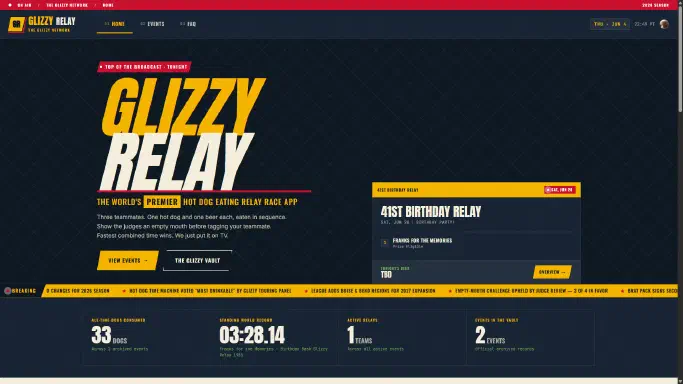
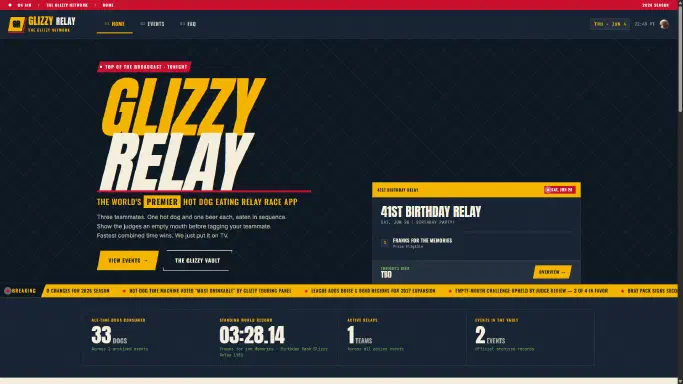
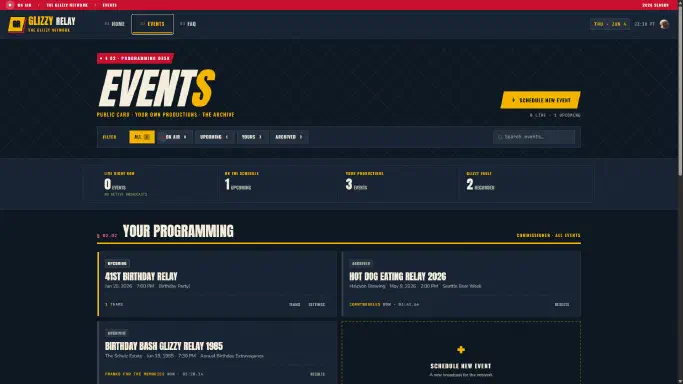
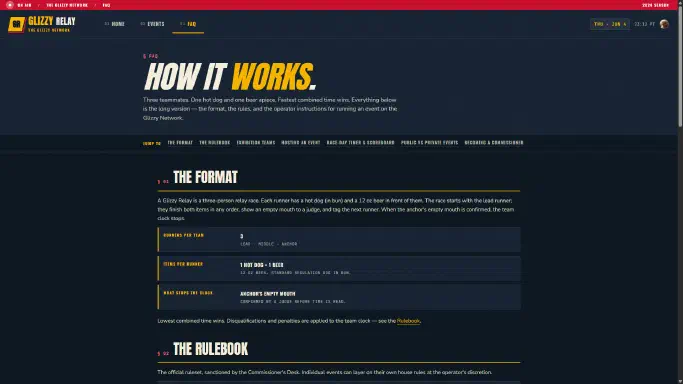
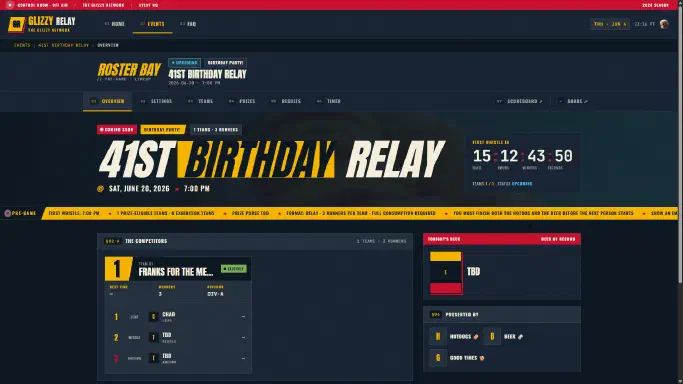
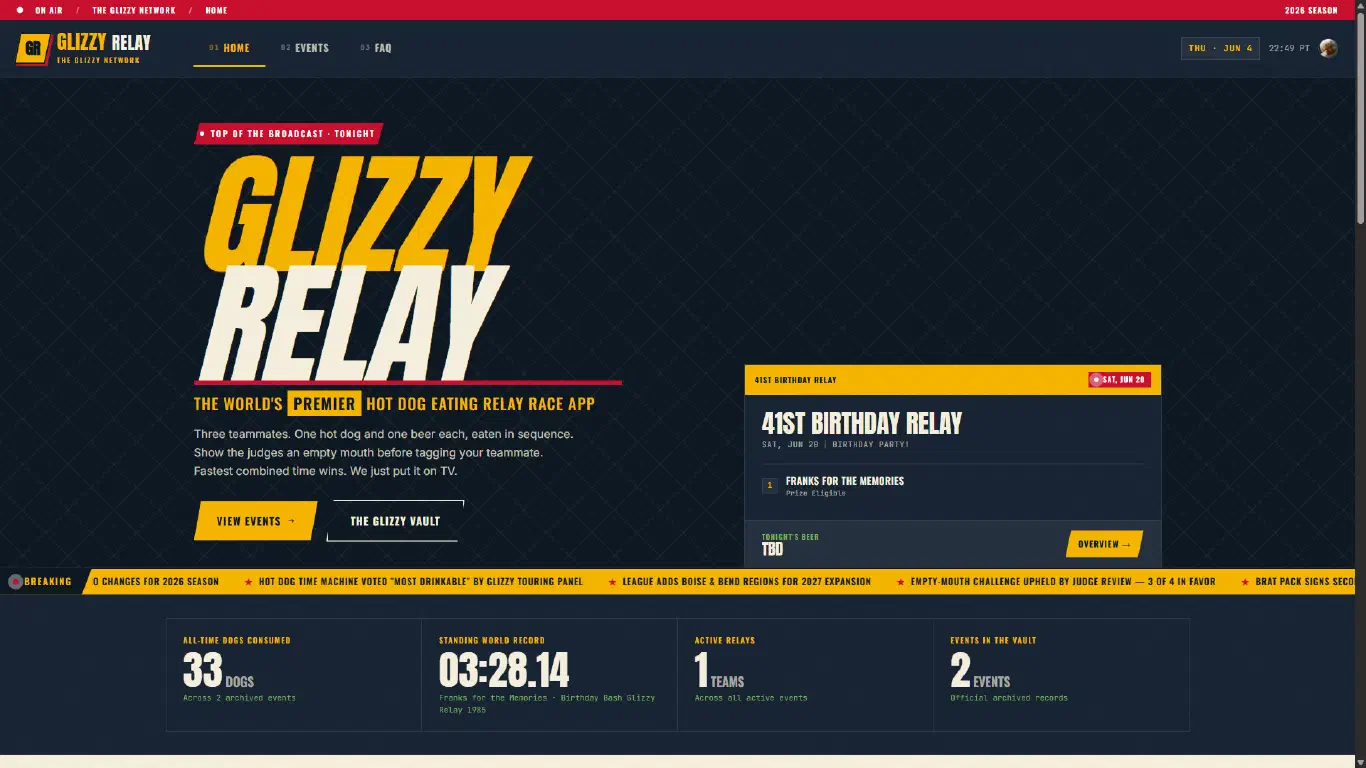
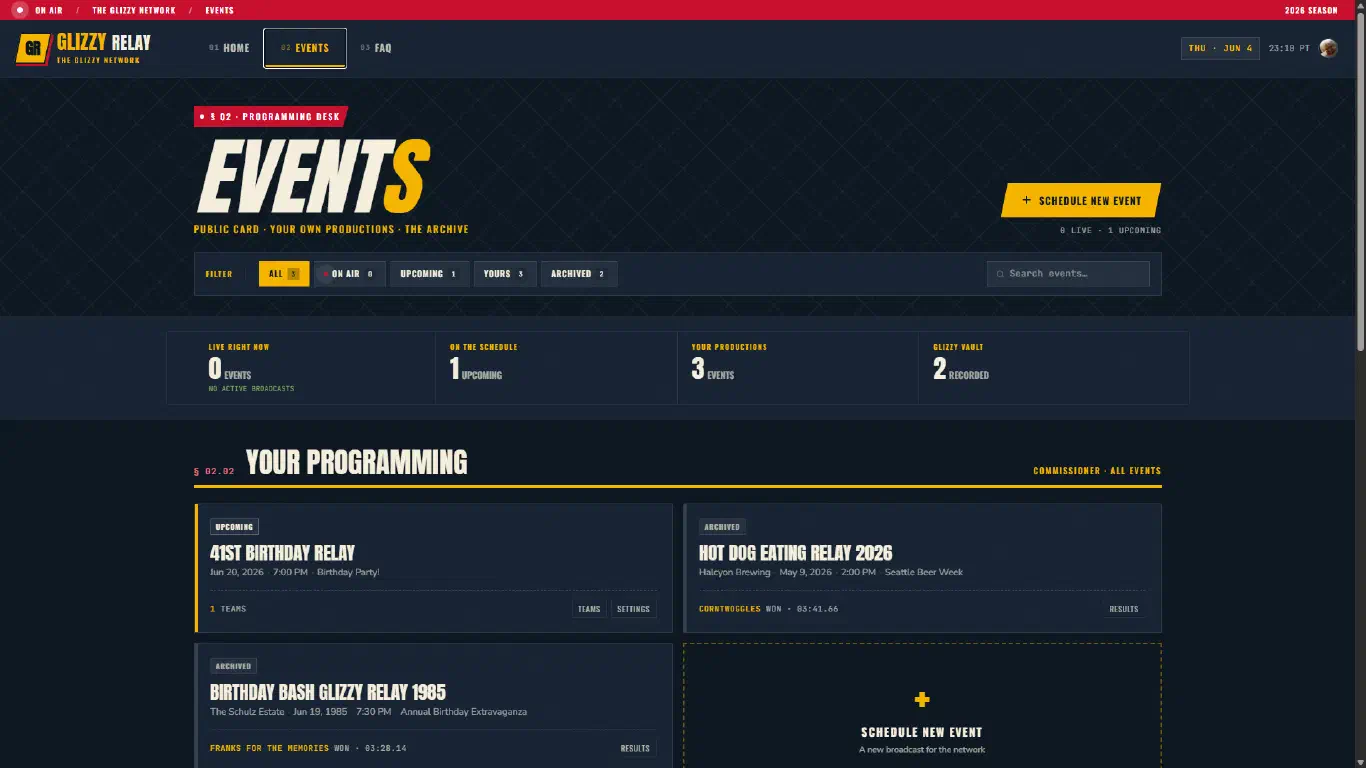
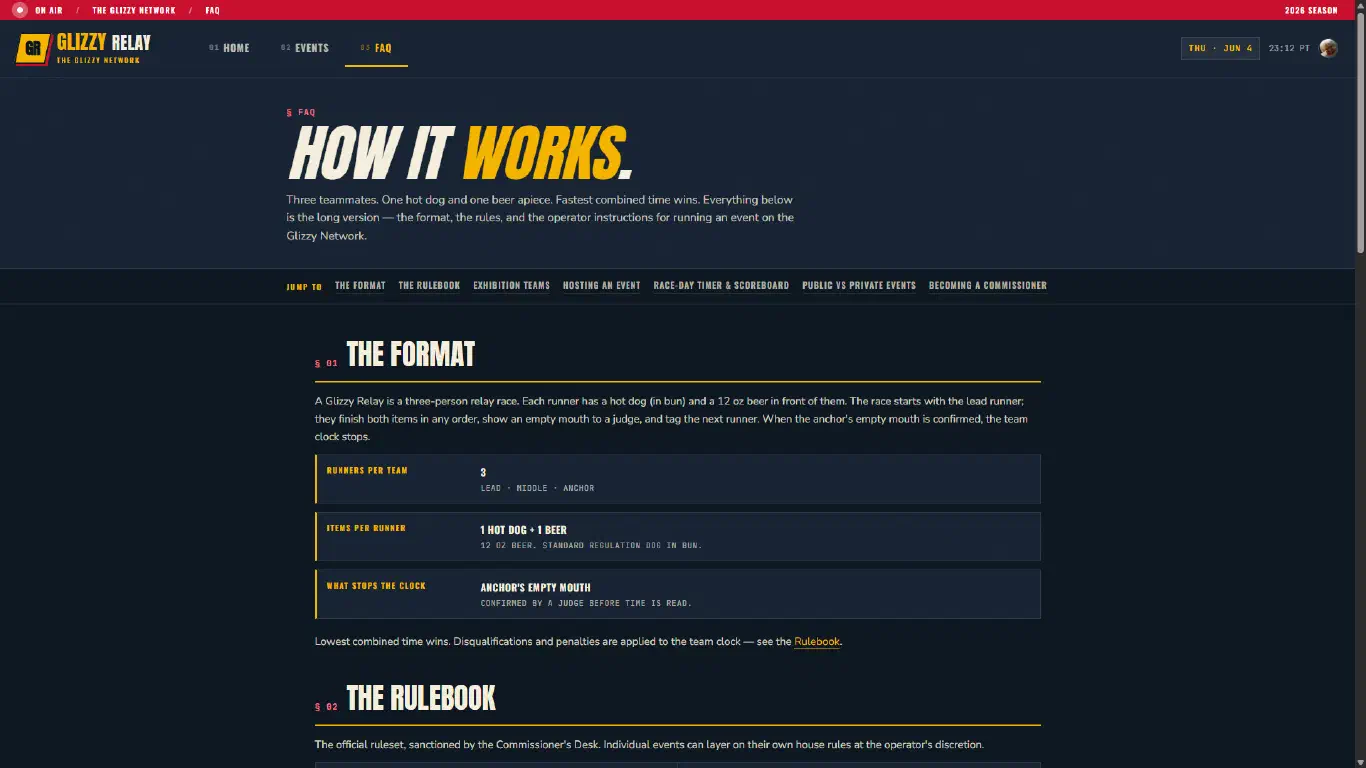
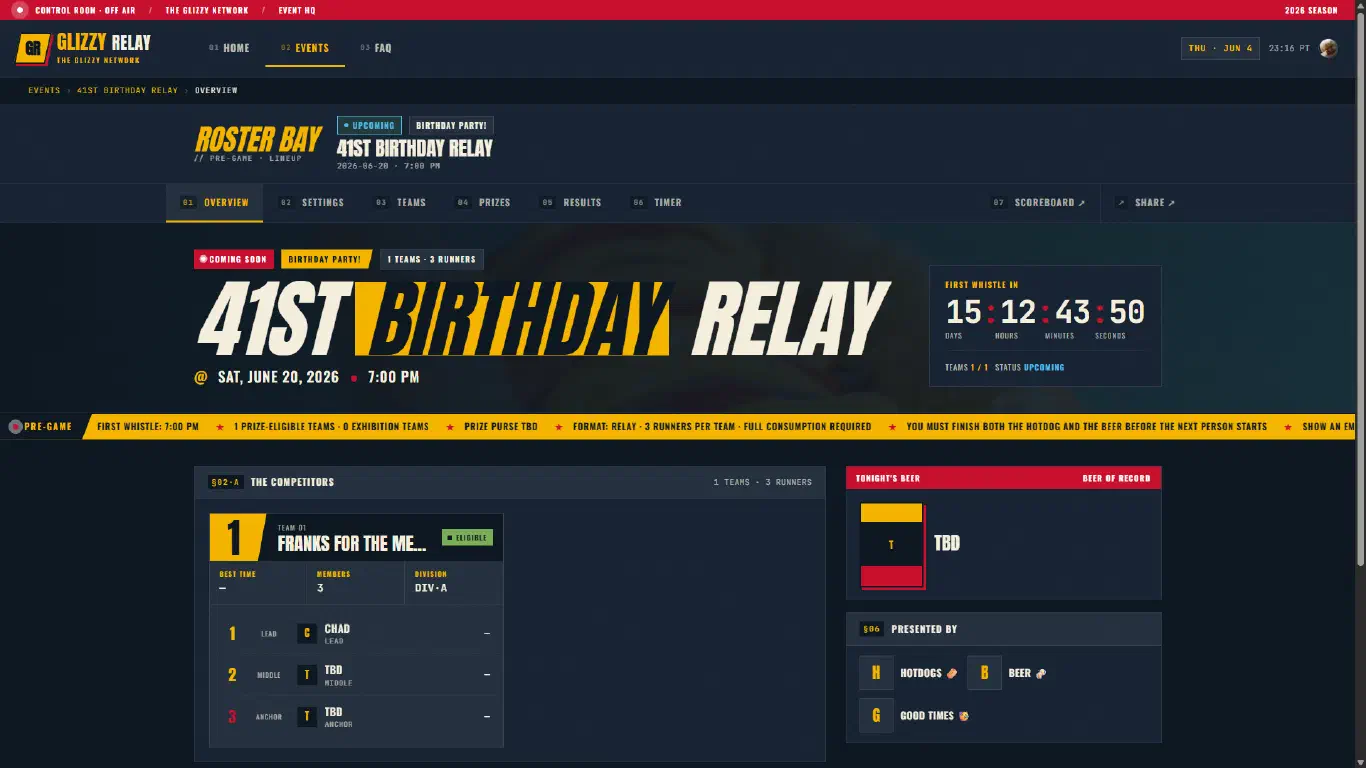
Glizzy Relay is the full-stack web platform behind the Hot Dog Eating Relay — a team event where three competitors eat a hotdog and drink a beer in sequence, with the combined leg times as the team score. The app handles the entire event lifecycle: scheduling and configuring events, rostering teams with per-member splits, running a spacebar/tap-driven live timer with screen wake lock, and broadcasting an ESPN-style projection scoreboard that syncs in real time.
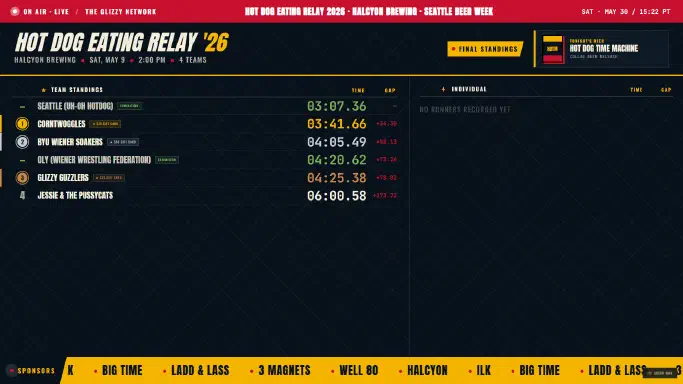
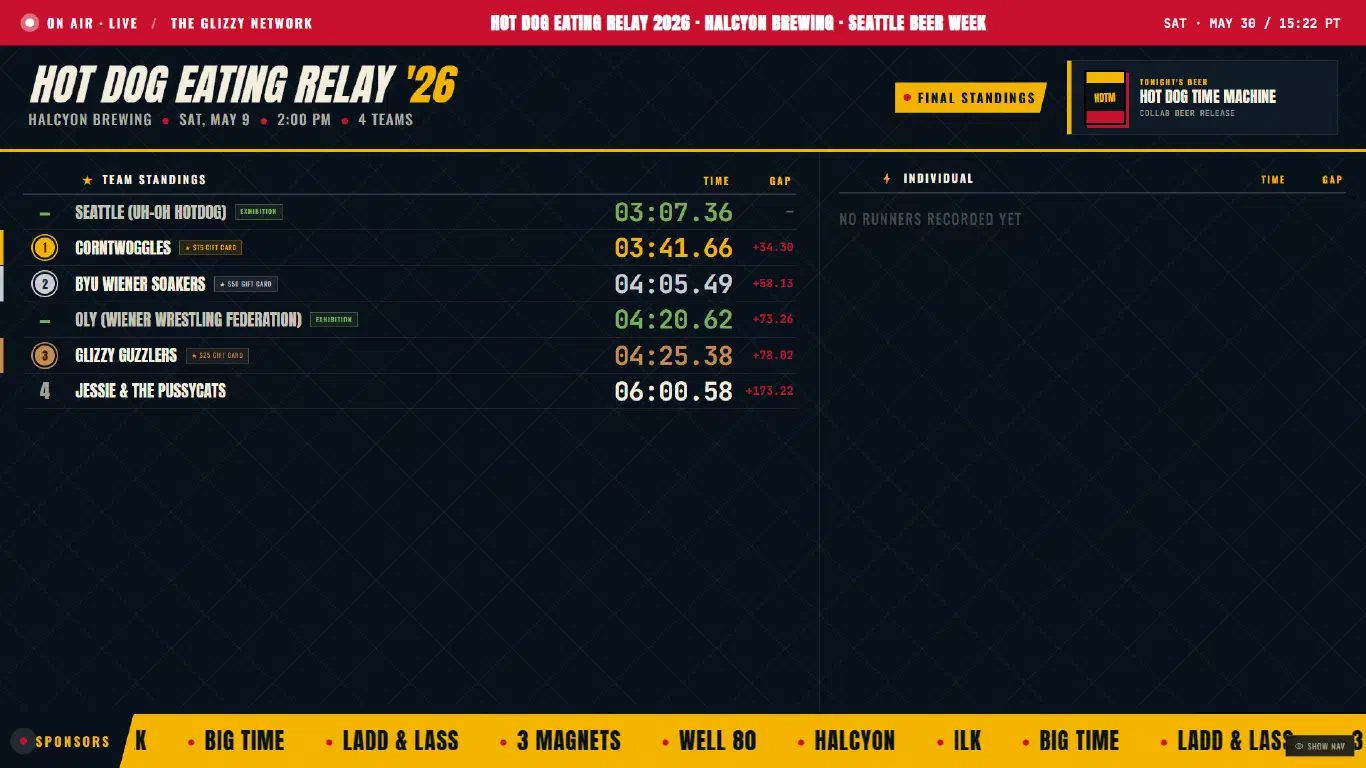
The scoreboard is the centerpiece. It renders a fixed 1920×1080 canvas (scaled to any viewport) with podium standings, an individual runner leaderboard, gap-to-leader columns, and a pulsing “On the Clock” indicator for whoever is mid-leg. Before the event starts it shows a first-whistle countdown with team registration counts; the transition to live racing is seamless. An exhibition division lets teams compete for time without being prize-eligible — they interleave into the standings by finish time but hold a — rank slot so they never displace a prize position.
The data architecture is optimistic-local with Supabase persistence and Realtime echo: every user action updates the React state immediately via a reducer, drains to Supabase through a dispatch queue, and is then replaced by DB truth when Supabase Realtime fires. Same-device timer-to-scoreboard sync runs over localStorage events for zero-latency live updates during a race; cross-device sync propagates only after “Apply” writes times to Postgres. Access control is two-layered — route guards and UI disables for UX, with RLS policies and BEFORE triggers on the database as the real enforcement layer.
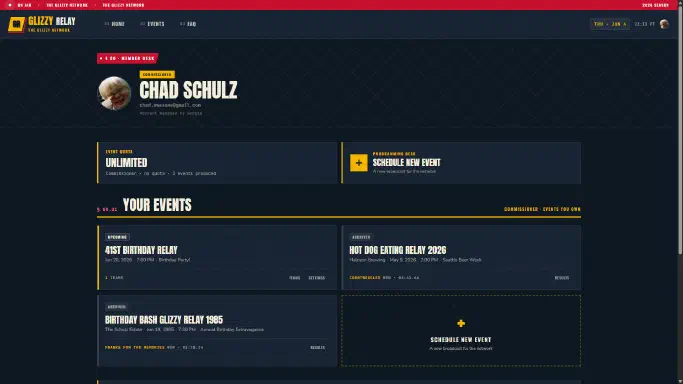
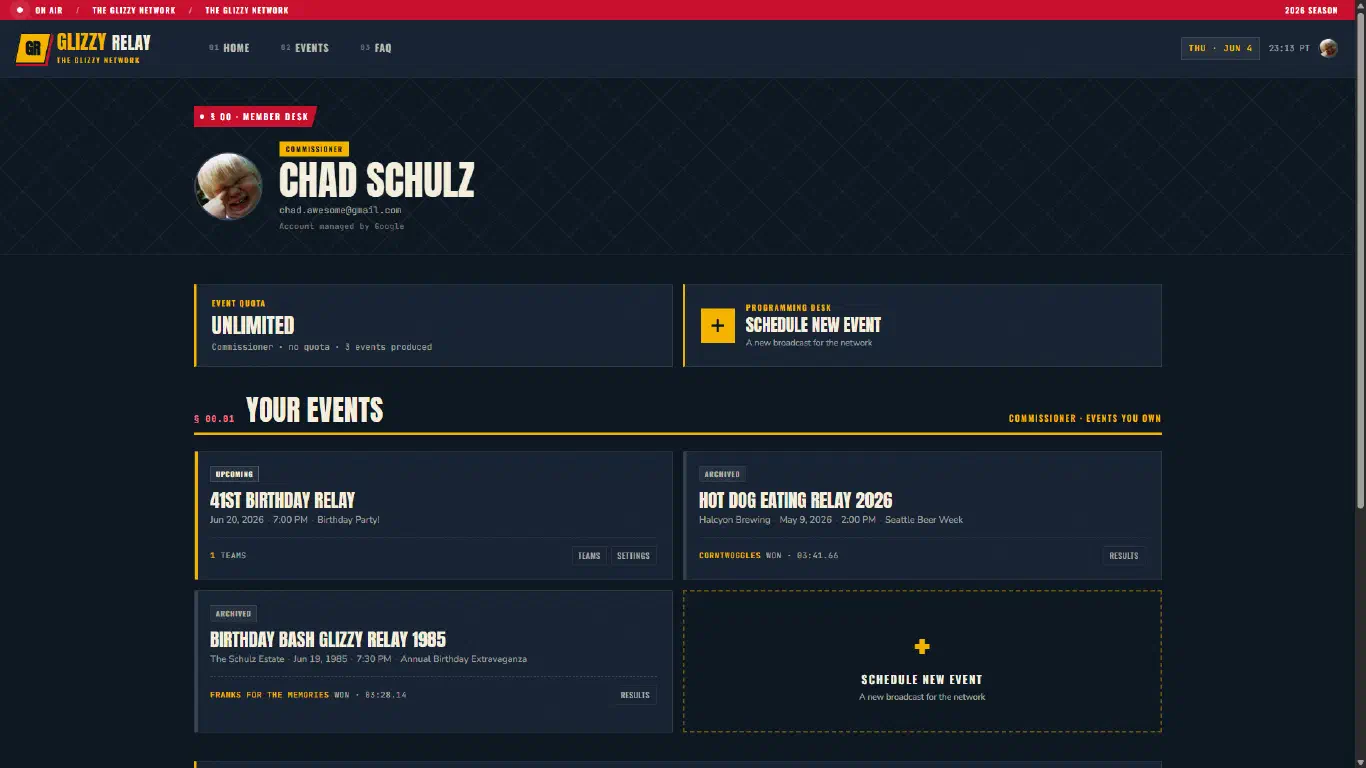
The app supports three roles (anonymous viewer, authenticated host, commissioner), public and private events, a configurable prize purse with sponsor tickers, and a curated event-art library for per-event visual branding. A /changelog page renders the live release notes at build time from CHANGELOG.md, and an “On Deck” roadmap section gives transparency into upcoming directions. The next major planned feature is Leagues — persistent account-owned teams, season scheduling, and cross-event stats.
Why
Nobody asked for this. That was kind of the point — it was an obsession project, built because the idea was too fun not to build.
It was also the first time I coded seriously with Claude, which changed how the whole thing felt. And it was a natural place to finally try Supabase and PostgreSQL — a real app with relational data, auth, and realtime sync was a better proving ground than a toy project. The event gave the app a reason to exist; the app gave the stack a reason to get complex.
📸 screenshots.zip